- Role
- Quest Designer & Implementer
- Team
- Solo
- Tools
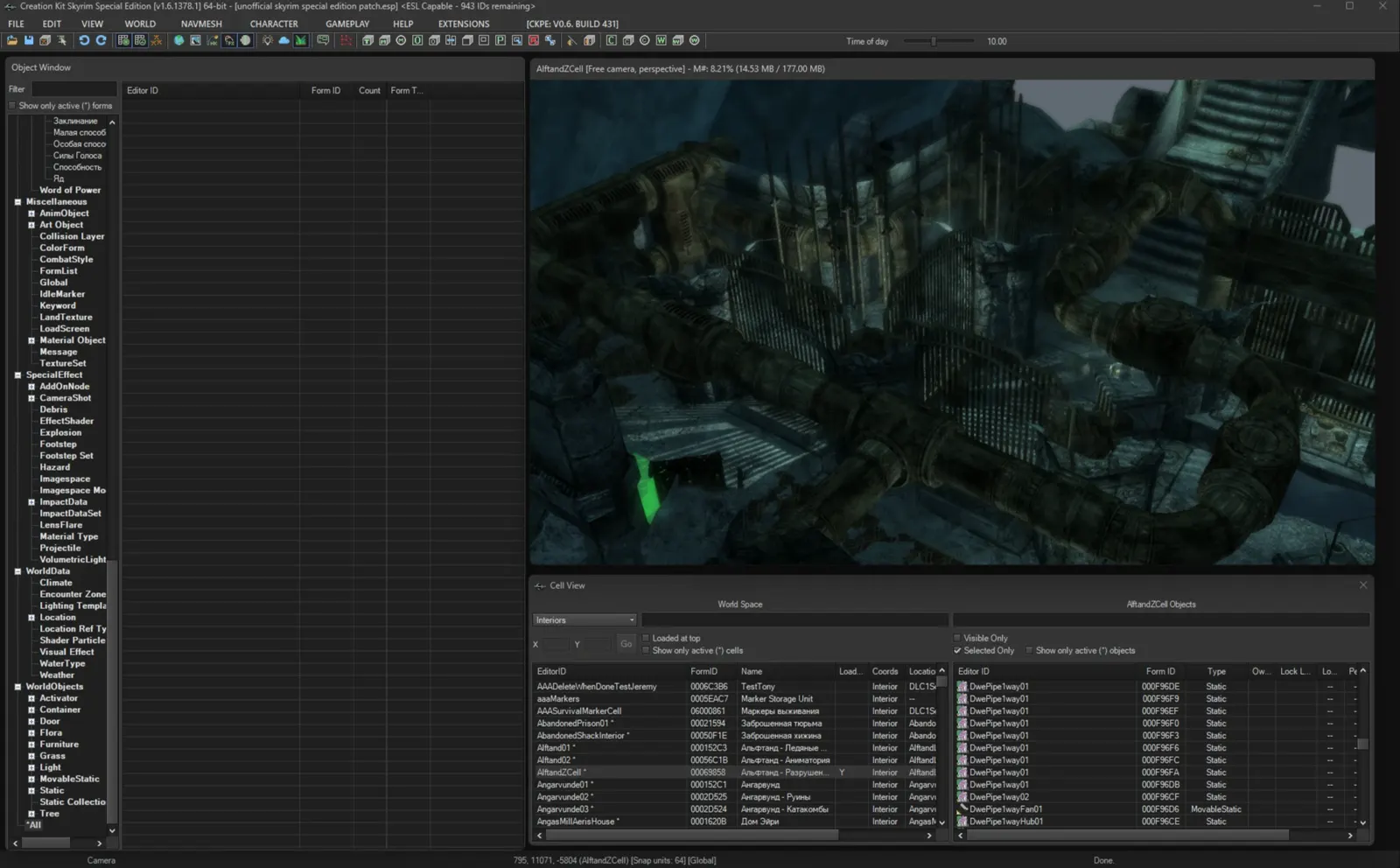
- Creation Kit, Papyrus, xEdit
- Year
- 2025
What I did
- Designed a multi-stage quest with branching dialogue and multiple resolution paths about a religious conflict in Elder Scrolls lore.
- Created the antagonist, Cendelius Munia, with design pillars that set the rules for his dialogue and his persuasion checks.
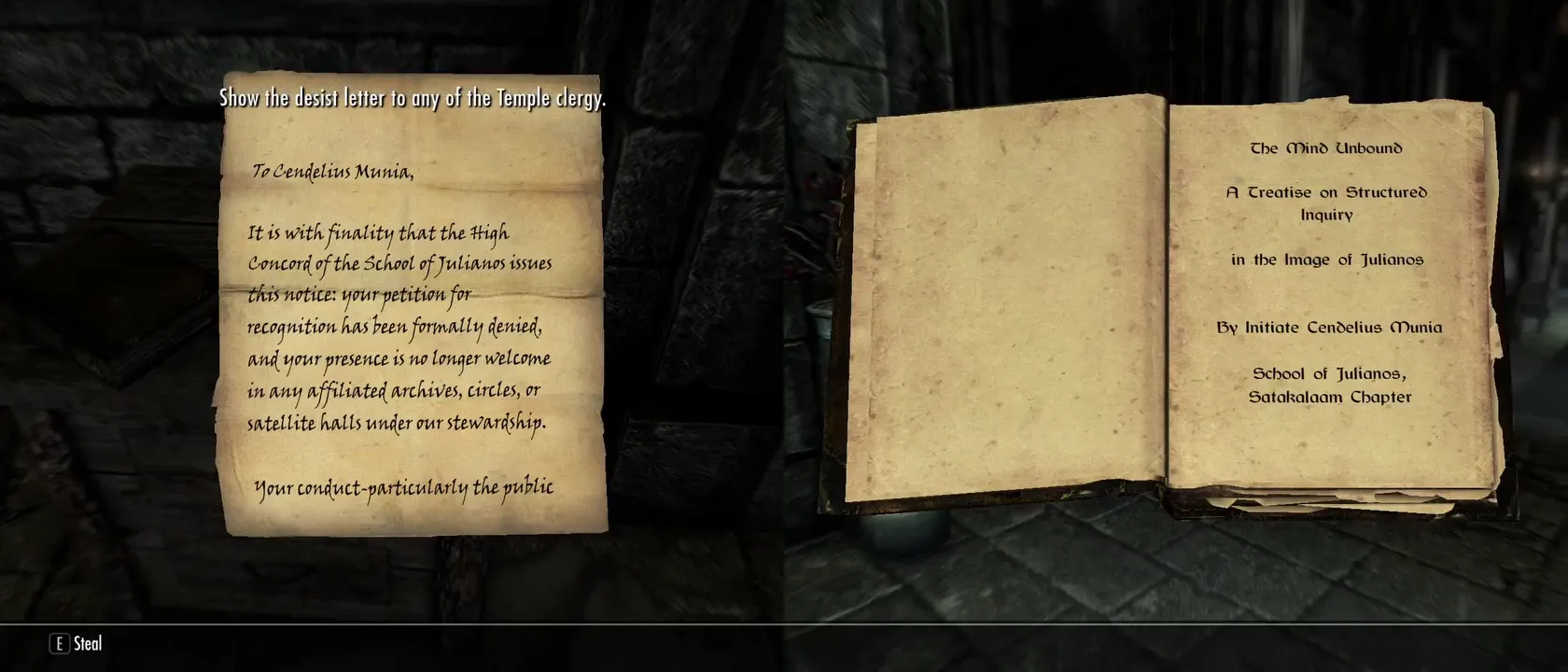
- Wrote the in-world documents that carry the investigation: his treatise and the letter that exposes him.
- Built the quest flow in the Quest Editor with stages, objectives and dialogue conditions, and timed scenes for several NPCs.
- Wrote Papyrus scripts for stage management, condition checks and environmental triggers.
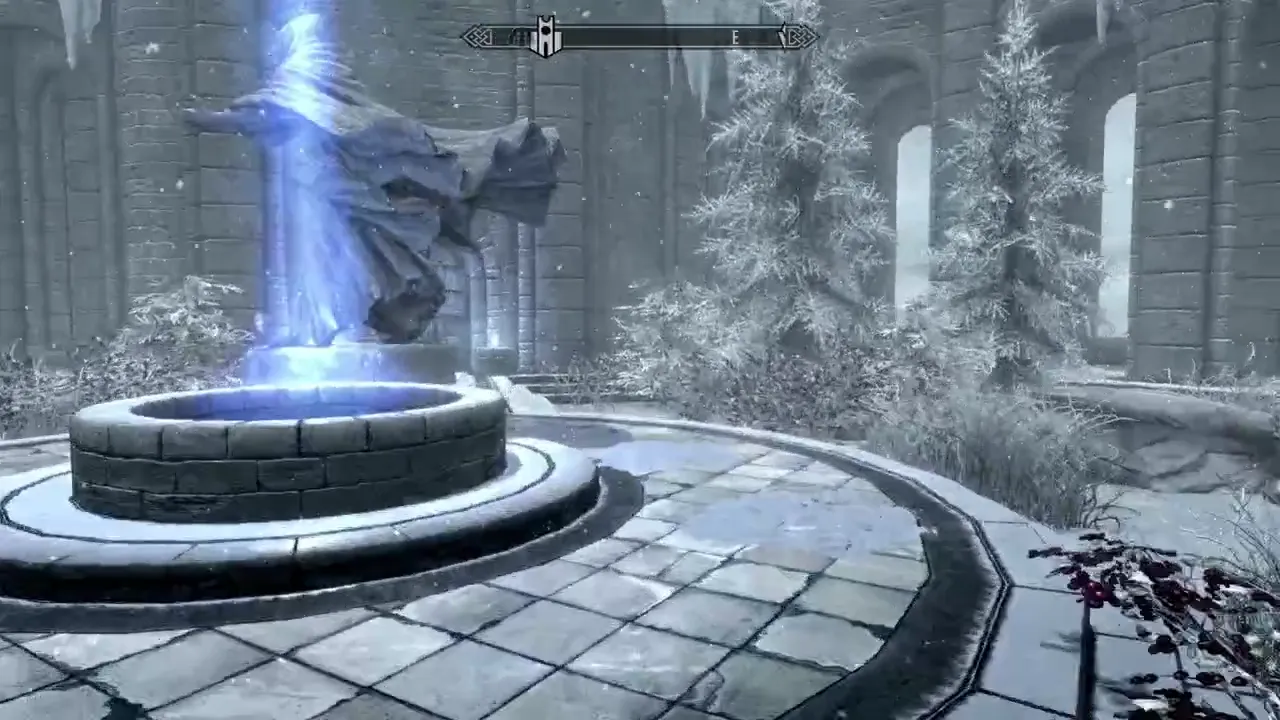
- Placed XMarkers, trigger volumes and story props, and kept NPC movement navmesh-safe.
A quest built on one belief
I built the quest's conflict from one belief. Cendelius treats Julianos, the god of logic, as a geometric truth, where the Temple sees a figure of worship, and that puts him at odds with the College of Winterhold and the Temple.
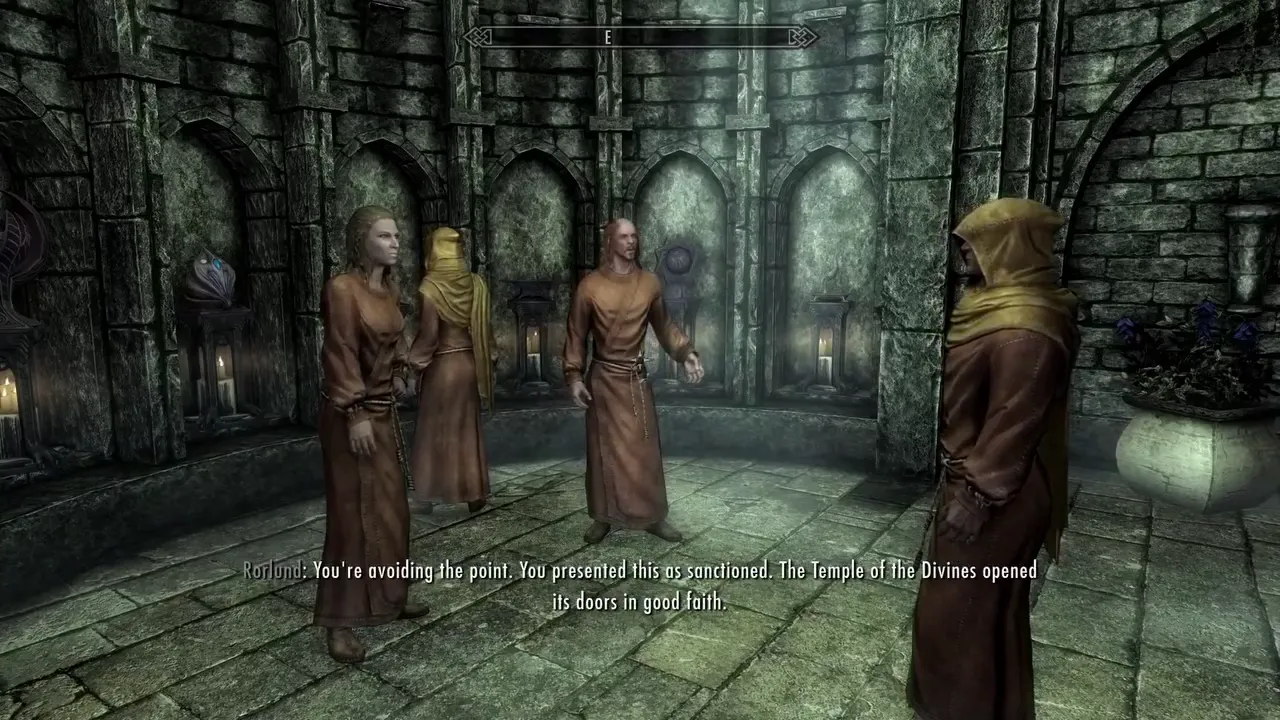
I structured it as an investigation. The player searches his desk, finds proof that the School of Julianos rejected him and banned him from its halls, and decides what to do with it. I staged the confrontation as a scripted scene between several priests.
Designing the antagonist
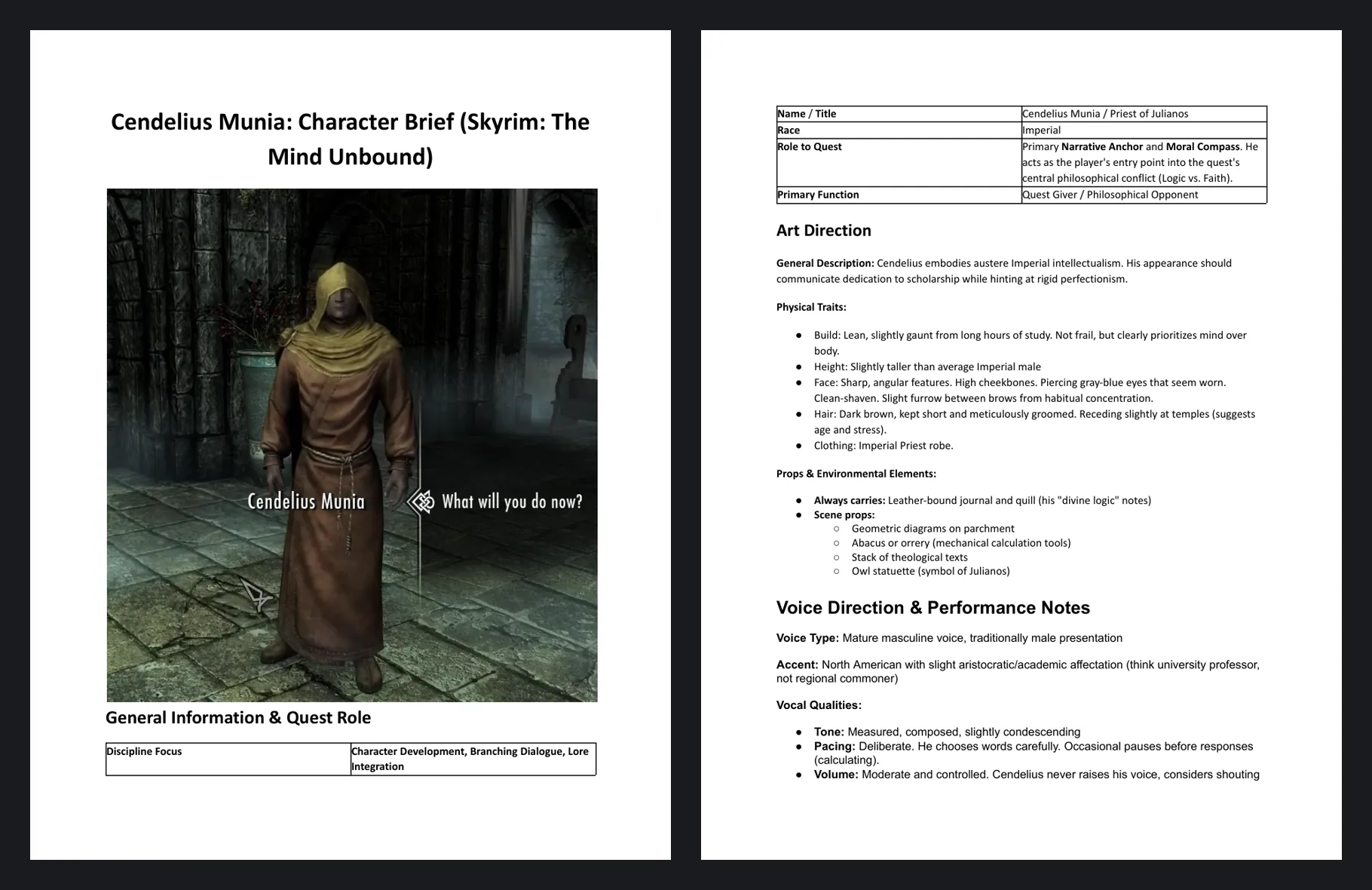
Cendelius is built on 3 pillars, and each one sets a rule for play.
- Rigor and logic: persuasion checks need rational arguments. Emotional appeals fail.
- Moral ambiguity: he is good at heart but will spy and manipulate for order, so quest objectives ask the player to judge his methods.
- Detached educator: his greeting is a philosophical challenge, and he grows calmer when challenged.
His 4-page brief also gives art direction, props and voice direction, with reference performances from Spock, Sherlock Holmes and Tyrion Lannister.
An investigation told through documents
I wrote the documents the investigation runs on. His treatise, The Mind Unbound, shows how he sees his god, and the desist letter from his own order shows what he is hiding.
I placed books and notes on Julianos and the College in his spaces as optional lore for players who want more.
Inside the Creation Kit
Quest stages track progress and relationships through GetStage(), SetStage() and SetObjectiveCompleted(). Dialogue conditions read stages, globals and relationships to surface the right conversation paths.
Scenes handle timing, animation and movement for moments with several NPCs.