- years of in-world history my codex entries draw on
- 1,000
- institutions I write for: 2 churches, 2 orders, a Parliament, a university and the Guard
- 7
- codex entries in my sample: people, factions, history and faith
- 9
- tracked variables my dialogue reads and updates
- 5
- Role
- Narrative Designer (main)
- Studio
- Far Owl Studios, 5 developers
- Tools
- Articy:draft, Unreal Engine 5
- Status
- In development since Nov 2025
What I did
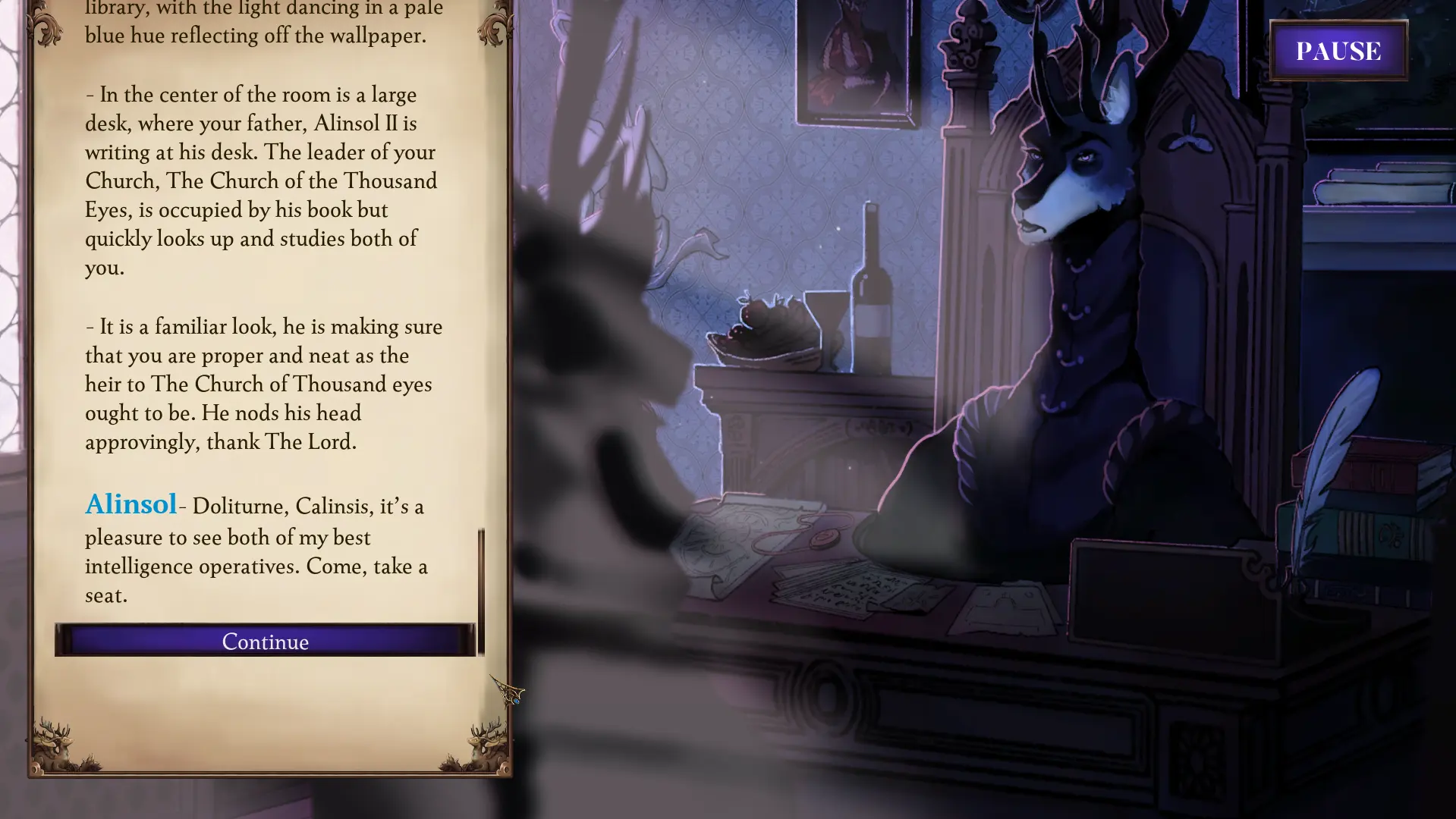
- Expanded the creative lead's original setting, a theocratic city of deer, through its history, faith, politics and psionics.
- Maintain and expand the world bible that the rest of the team builds from.
- Wrote the factions the plot runs on: a heretical sect, a secret order and a Parliament still scarred by civil war.
- Wrote character biographies, each with a private stake that pulls against their faction.
- Build dialogue and reports on the game's narrative systems: insights, Faction Affinity, Friendship and the Lie Tracker.
- Plan Act structure and pacing with the lead developer, and write the branching dialogue and codex.
Writing for a quadruped world
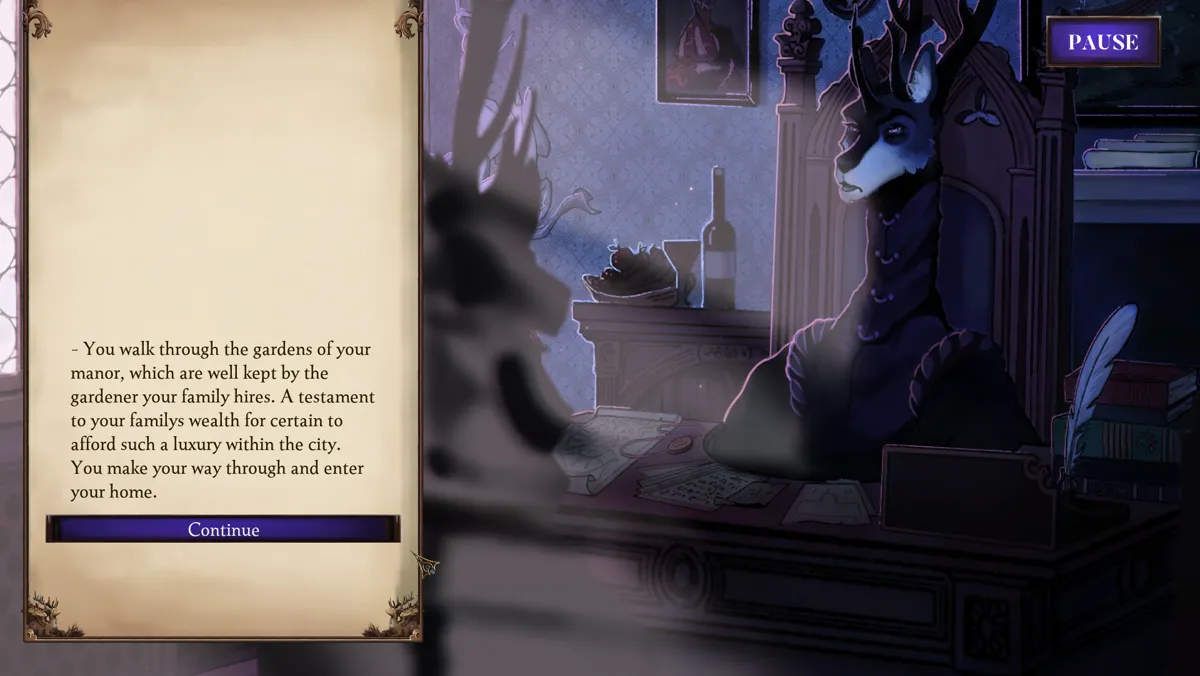
The cast has hooves, horns and magic, so I write without any humanoid defaults. My codex entries explain how psionics channeled through the horns takes the place of hands, and how it is limited by mental energy, stamina and will.
I wrote the culture's own terms into the codex and character biographies: clergybucks, fawnhood, a ruler with a heavy hoof, and dates counted After Arrival on a 13-month lunar calendar.
Turning history into plot
I wrote the codex entries that carry the political backstory: a 6-year civil war that killed 1 million of the city's 6 million people, and the treaty that still divides Church and Parliament.
The entries on the secret Church of the Thousand Eyes and the Order of Antlers set up the player's double role. Each one gives the player context to judge the factions and intel to use in reports.
The report system
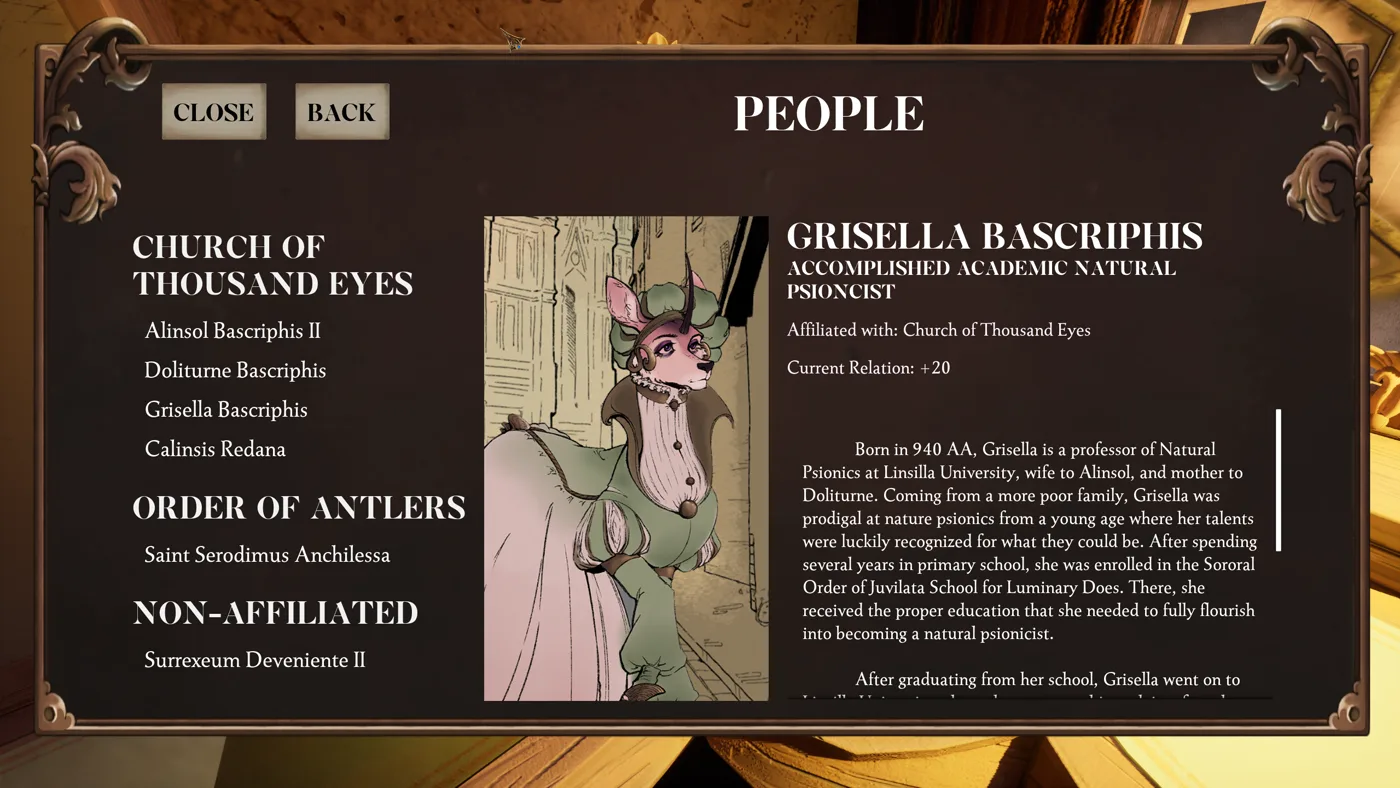
I write reports and dialogue for the core loop. Players gather insights from conversations, documents and devices, then choose which to include in each faction's report. Lore they have read in my codex becomes intel they can use.
Each report shifts Faction Affinity. When a faction catches a lie, the Lie Tracker records it, so my dialogue has to cover the excuse and the lost standing.
Branching in Articy:draft
I build conversations in Articy:draft on global variables for faction affinity, friendship with 2 key characters and the Lie Tracker. Input-pin conditions decide which of my lines can appear. Output-pin instructions update the variables after each choice.
Significant decisions change several variables and can jump to a new branch. Minor ones change a single flag.
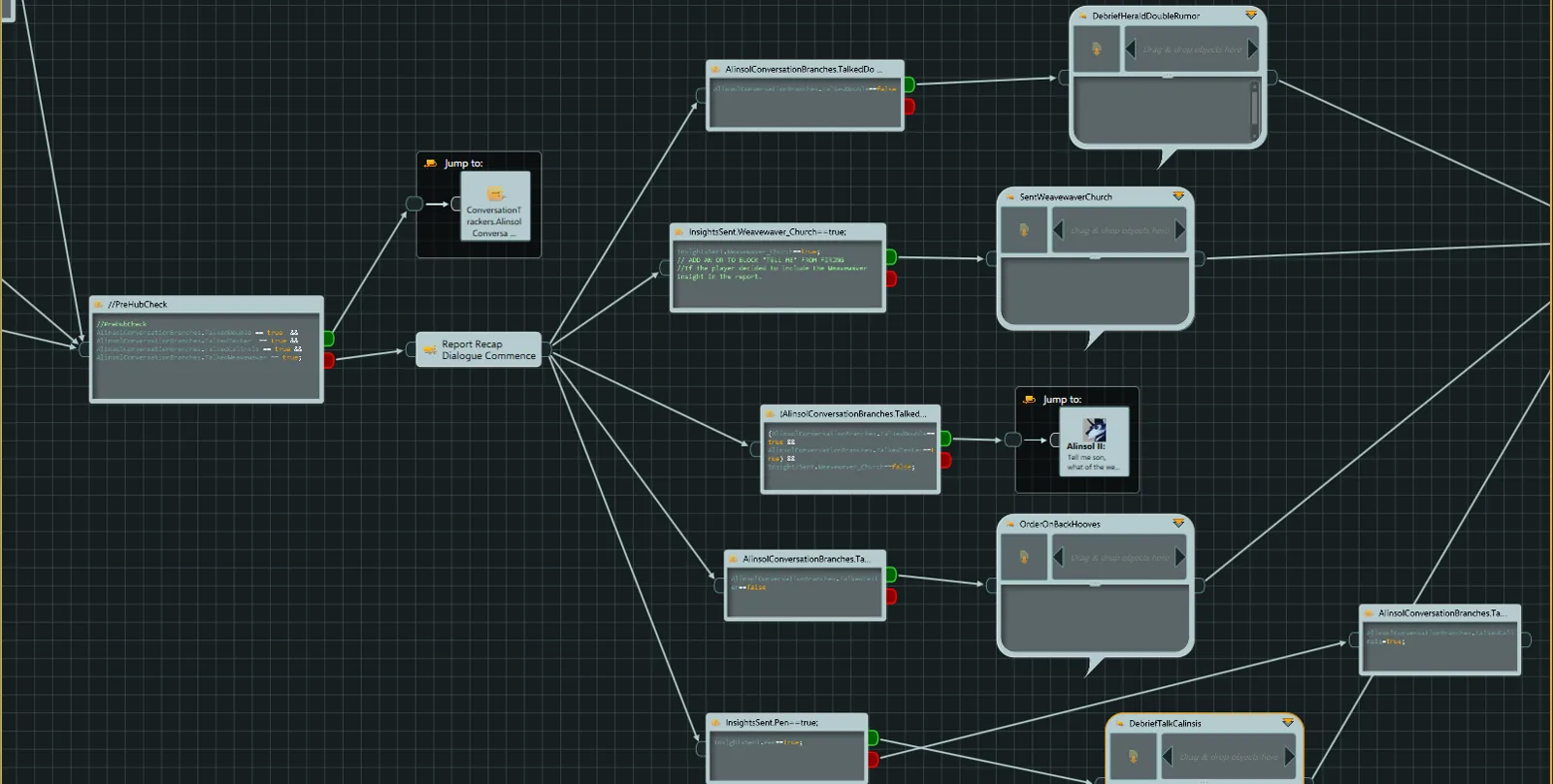
Dialogue that knows what you found
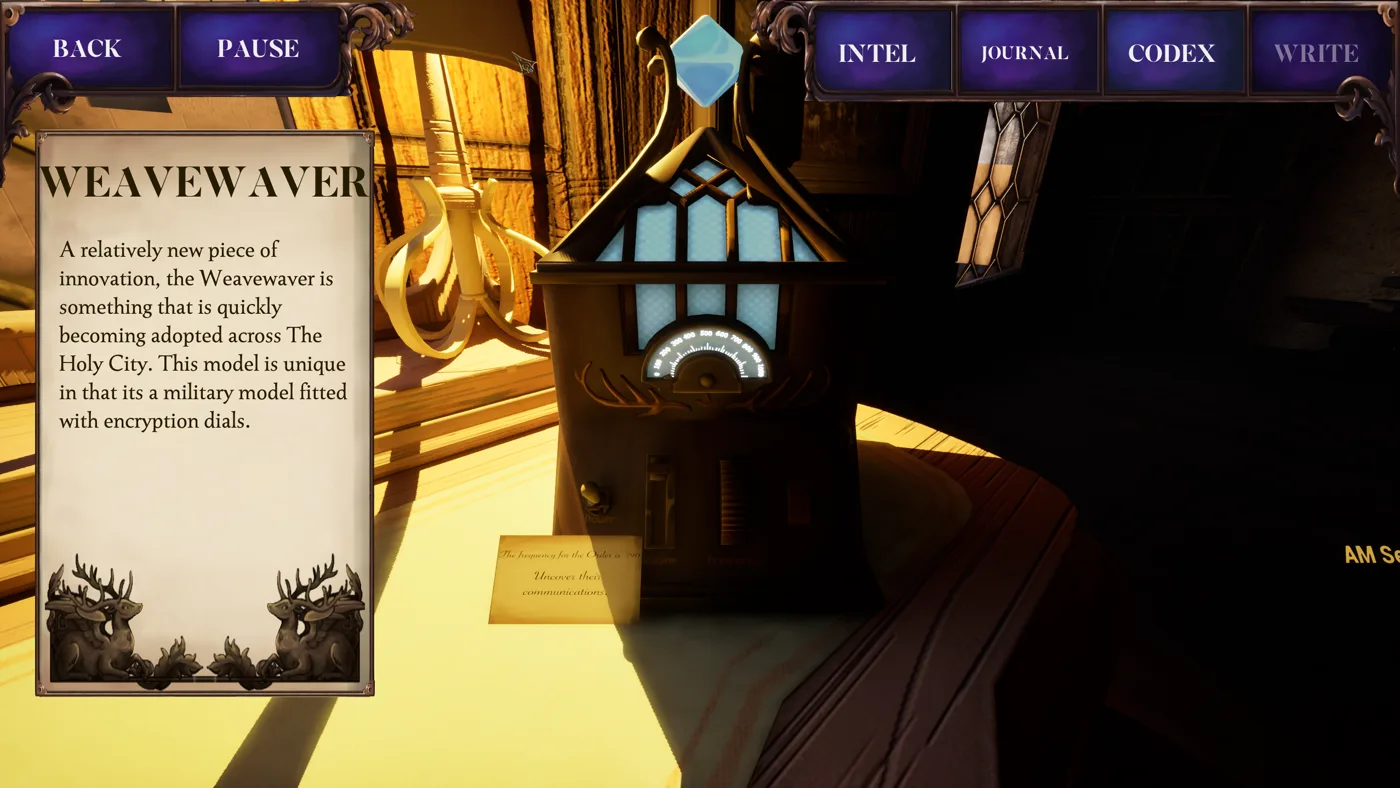
My dialogue reacts to the insights players collect from conversations, letters and the Weavewaver decoder.
A variable marks each insight the player collects, so a character can respond to what the player found. Most insights pay off right away in reports, and some pay off much later in the story.
Codex entries
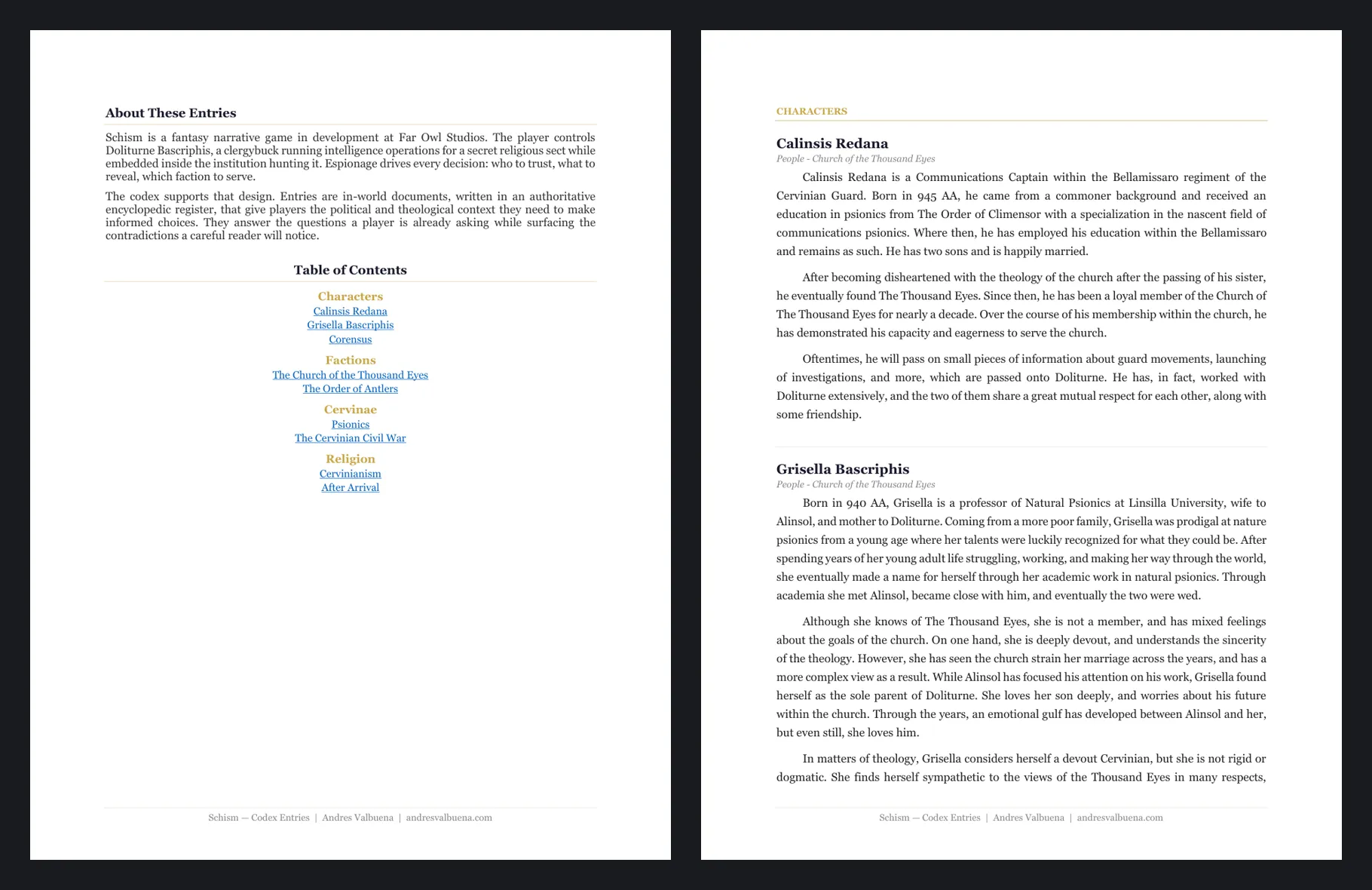
A 10-page sample of the in-game encyclopedia. Entries unlock through discovery and use an authoritative in-world voice. They answer questions the player already has and plant contradictions a careful reader will catch.
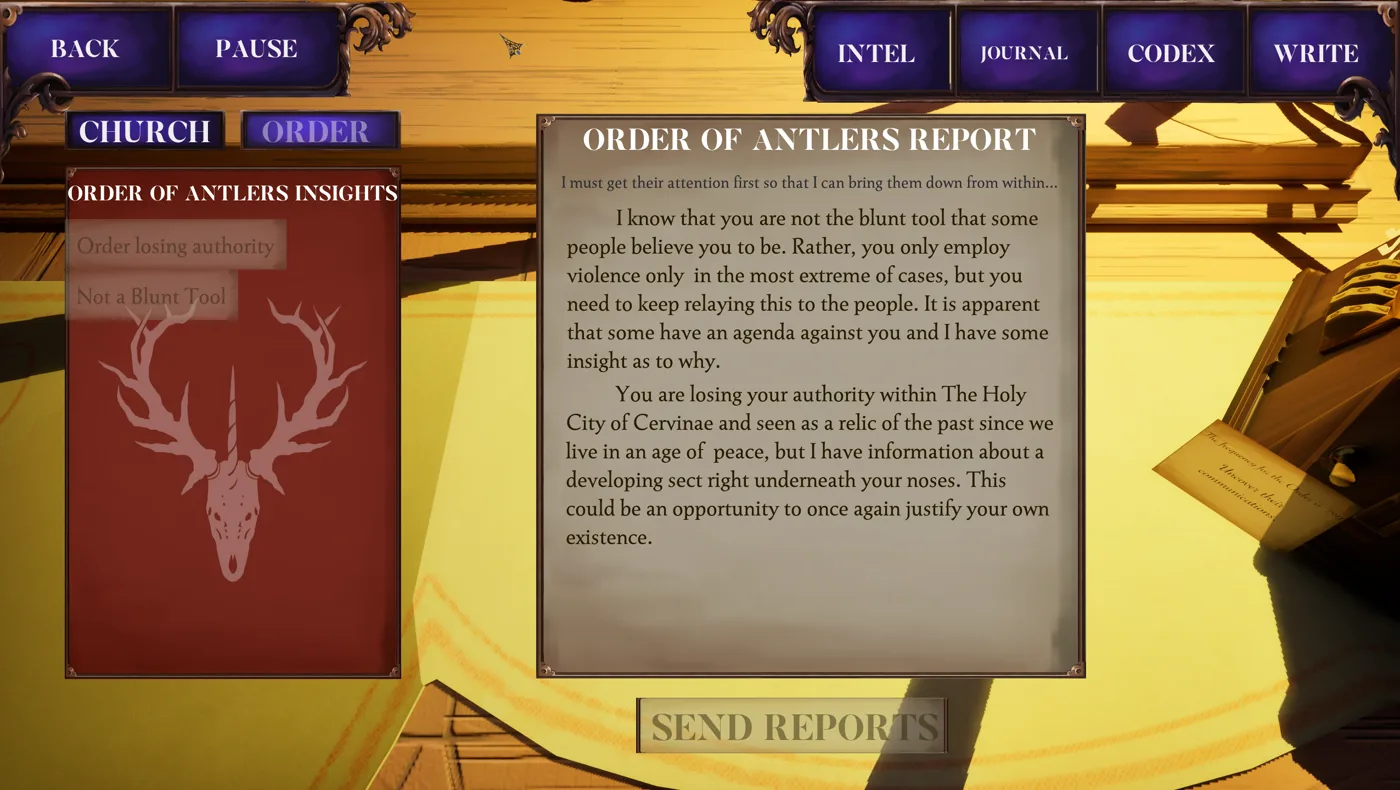
- People: Calinsis Redana, Grisella Bascriphis and Corensus
- Factions: the Church of the Thousand Eyes and the Order of Antlers
- The Cervinae: psionics and the Cervinian Civil War
- Religion: Cervinianism and the After Arrival calendar
More detail
Story setup
The player is Doliturne Bascriphis, heir to the Church of the Thousand Eyes and secretly an agent of the Order of Antlers. Every choice comes down to who to trust, what to reveal and which side you serve.
Variables and decision tiers
- Variables: Church affinity, Order affinity, Calinsis friendship, Milvitatum friendship, Lie Tracker.
- Conditions use articy:expresso, for example "show this line only if Church affinity > 50".
- Significant: telling Milvitatum about Calinsis to prevent a death. Major: unlock or lock intelligence. Minor: small variable changes.
- The system records which insights were collected and which were sent, so a faction can check a report against what the player found.
What I learned
Knowing which variables a line reads before writing it keeps every branch consistent. Because Articy exports to Unreal, none of the branching had to be hardcoded in engine.