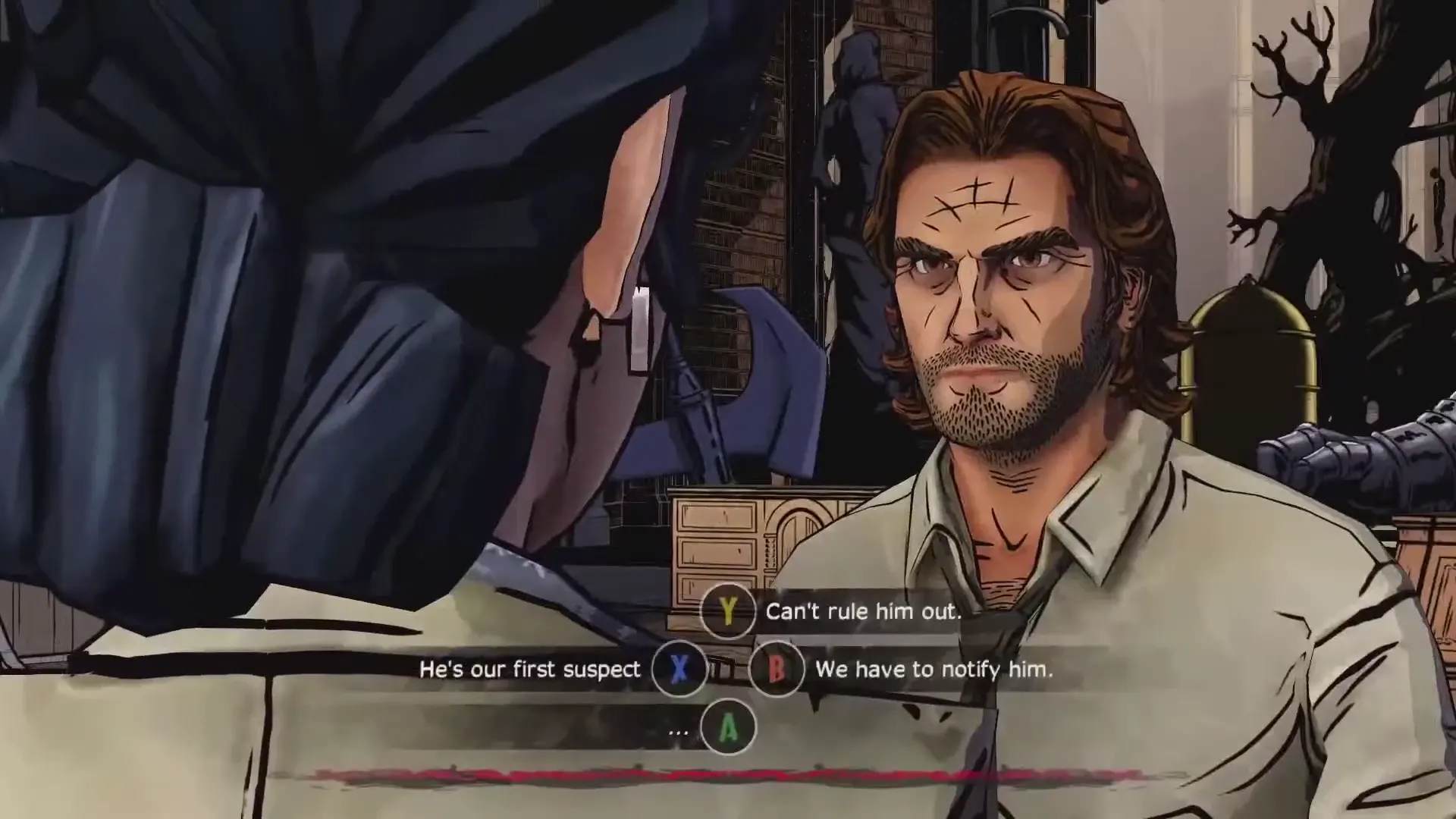

Telltale redefined interactive narrative at a time when the industry was fixated on player agency and branching complexity. Emotional resonance mattered more than mechanical depth in their work, and their formula showed that every choice could feel consequential without the story actually branching much.
This analysis doubles as a post-mortem and a tool for narrative designers. Use the navigation above to explore their timeline, break down their mechanics, and trace the business decisions that led to their collapse.
Telltale Games: The Ludonarrative Recipe Perfected
The core thesis: Telltale Games’ legacy shows that emotional weight and player expression, delivered through accessible, cinematic design and high-stakes moral triage, can define interactive narrative. That format and its design DNA still shape the industry.
The Full Analysis
This layered presentation was based on the study I wrote: "The Architecture of Ephemeral Choice: A Ludonarrative Analysis and Post-Mortem of Telltale Games". The paper examines the design philosophy, business decisions, and lasting impact of Telltale's revolutionary approach to interactive narrative.
View the complete academic analysis with detailed citations, design breakdowns, and industry context.
Timeline
Telltale's history runs from a small start through fast growth to a crash. Scroll through the moments that defined the studio and the episodic format they helped popularize.
2004: The Founding
Born from the ashes of LucasArts. Veterans Dan Connors, Kevin Bruner, and Troy Molander start Telltale Games to continue the legacy of story-driven adventure games.
2005-2010: Finding a Voice
Telltale Texas Hold'em (2005) was their first game, but Sam & Max (2006-2010) codified their episodic model. They resurrected beloved series like Monkey Island and Wallace & Gromit.
2011: The Pivot
Jurassic Park: The Game is released. It deemphasizes puzzles for QTEs and cinematic action. It's mechanically clunky but serves as the direct precursor to their next big hit.
2012: The Breakout
The Walking Dead: Season One changes everything. It wins over 90 GOTY awards and popularizes the "Telltale Style" of choice-driven narrative. The focus shifts from puzzles to emotion.
2013-2015: The Golden Age
A creative peak. The Wolf Among Us (2013) masters noir. Tales from the Borderlands (2014) masters comedy. The formula seems infinitely flexible.
2015-2017: The Factory
Game of Thrones (2014) and Minecraft: Story Mode (2015) begin a period of massive, unsustainable growth. The studio juggles 4-5 major IPs at once. "Telltale jank" and burnout become serious problems.
2018: The Collapse
In September, Telltale announces a "majority studio closure." Over 250 employees are laid off. It's a brutal end caused by management failure and an unsustainable business model.
The Legacy & Rebirth
The name is bought by LCG Entertainment ("New Telltale"). Key talent forms AdHoc Studio. Skybound Games finishes TWD: The Final Season. The format, and the talent, live on.
Narrative Deep Dive: The "Telltale Style"
The Telltale formula worked because of several design decisions, all centered on emotion over mechanics.
Impact on my design philosophy: This analysis directly informs how I structure player choice. I prioritize perceived consequence and player-authored identity over exhaustive branching, use timed pressure when it serves character intent, and map reactivity so that the world remembers choices. In practice: choices that reveal who the player is becoming, rather than only what they're doing.
1. The Mechanic as Emotion
Telltale swapped the core loop: out went "Puzzle → Information → Progress," in came "Emotional Choice → Character Reaction → Consequence." The "game" became emotional triage under pressure.
3. "Clementine will remember that."
That UI notification validates the player's action ("What you did mattered") and builds a web of perceived consequences that can hit harder than a huge branching tree.
2. The Timer as Instinct
The timed dialogue choice changed how players engage with narrative. It pushes you toward gut decisions, no time to optimize or second-guess. You feel your way through, which tightens the bond between player and character.
4. Ludonarrative Harmony
Telltale put character relationships at the center of the loop. Lee and Clementine, Rhys and Fiona, Bigby in Fabletown: the mechanics exist to serve those emotional stakes. You make impossible choices that reveal who you are playing as.
Critical Analysis: The Telltale Formula Under Scrutiny
Telltale's approach has drawn plenty of criticism from players and devs alike. Below are the sharpest critiques and how their design philosophy holds up.
The "Illusion of Choice" Problem
My choices don't matter. The character I saved dies in the next episode anyway. It's a railroaded story pretending to be a branching one. The game lies to me about player agency.
Design Philosophy Response
The juice is in the moment of choosing: player expression in its raw form. The game wants you to define your character and live with that choice.
Mechanical Stagnation
Every Telltale game feels identical. Click dialogue, occasional QTE, rinse and repeat. There's no evolution or innovation in their gameplay systems. It's the same formula copy-pasted across different franchises.
Consistency as Strength
That consistency lets players focus on the story instead of relearning systems every time. Genre conventions work the same way. You don't fault every FPS for similar controls.
"Telltale Jank"
The games are riddled with bugs, poor performance, and technical issues. Save files corrupt, choices don't register, and the engine feels outdated. How can you take narrative seriously when the basic functionality is broken?
Production Reality
Blame the business model more than the design. Unsustainable schedules and management choices drove the technical mess. The design thinking holds up. The execution failed.
Emotional Exploitation
Telltale games are emotionally manipulative. They force you to make impossible choices just to make you feel bad, then don't give you meaningful ways to change outcomes. It's trauma porn disguised as meaningful choice.
Cathartic Design
The so-called manipulation lands as catharsis. Putting players in impossible situations creates real investment. No tidy happy endings, closer to how things actually play out.
No Replay Value
Once you've played a Telltale game, there's no reason to replay it. The choices don't meaningfully change the story, and the 'different' endings are just cosmetic variations. It's a one-time experience masquerading as a game.
Experience Over Replayability
Not every game needs infinite replay value. Telltale aimed for narrative experiences, closer to a novel or film. The emotional ride matters more than mastery or multiple runs.
The Rise & Fall: A Story in Data
The collapse came from business and production failures. The creative work held up. "Telltale crunch" was real. The data shows an unsustainable spike in output. This chart tracks episodes released per year. Output ramps up sharply from 2014 to 2017.
Telltale's Episodic Release Cadence (2005-2018)
The Legacy: The Diaspora
The format survived the 2018 collapse. Talent scattered to Skybound, AdHoc and New Telltale, and the work itself had legs. The failure was business.
Telltale Games
(2004-2018)
The Collapse
The studio's talent moved to three new homes.
Skybound Games
Stepped in to hire the "Still Not Bitten" team to finish The Walking Dead: The Final Season.
"New" Telltale (LCG)
Acquired the brand and assets. Publishing The Expanse and developing The Wolf Among Us 2.
AdHoc Studio
Founded by Telltale creative leads. The "heart" of old Telltale, proving the format's power. Working on Dispatch.