Andres Valbuena

← Home

D&D 5e · Quest, encounter & settlement modules

Tabletop Design

100+ sessions as Game Master

Tabletop is where I test the same skills I use in digital RPGs: branching structure, factions with real motives, and consequences that follow what players actually do.

pages across 3 original modules
52
endings and resolution paths across those modules
14
factions in The Slag Bargain, each with a 3-phase plan
4
sessions run as Game Master in D&D 5e and Pathfinder 2e
100+
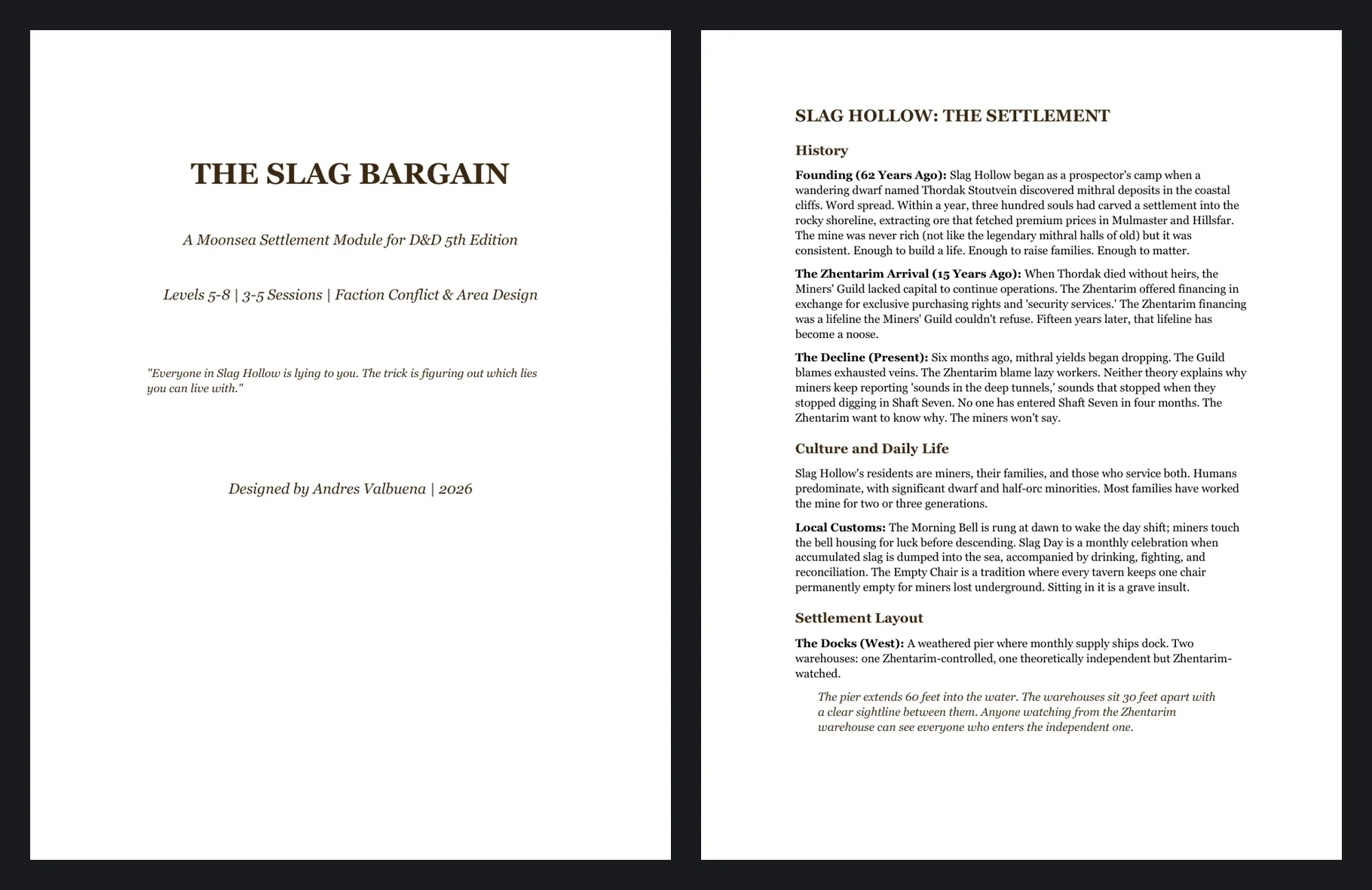
The Slag Bargain cover and settlement history page

Settlement module · Faction conflict

The Slag Bargain

Moonsea · Levels 5 to 8 · 3 to 5 sessions

I designed a settlement where a dying mithral mine pits the Zhentarim, a Harper spy, the Miners' Guild and a temple of Waukeen against each other. None of them knows the cause: a xorn colony has fed on the vein for 300 years.

  • 4 factions, each with goals and a 3-phase escalation plan that runs if the players do nothing
  • A town with 62 years of history, local customs and 4 districts mapped with sightlines and chokepoints
  • 6 resolution paths with long-term consequences, tracked by Clock and Trust systems
  • Designer commentary drawing on Fallout: New Vegas and The Outer Worlds
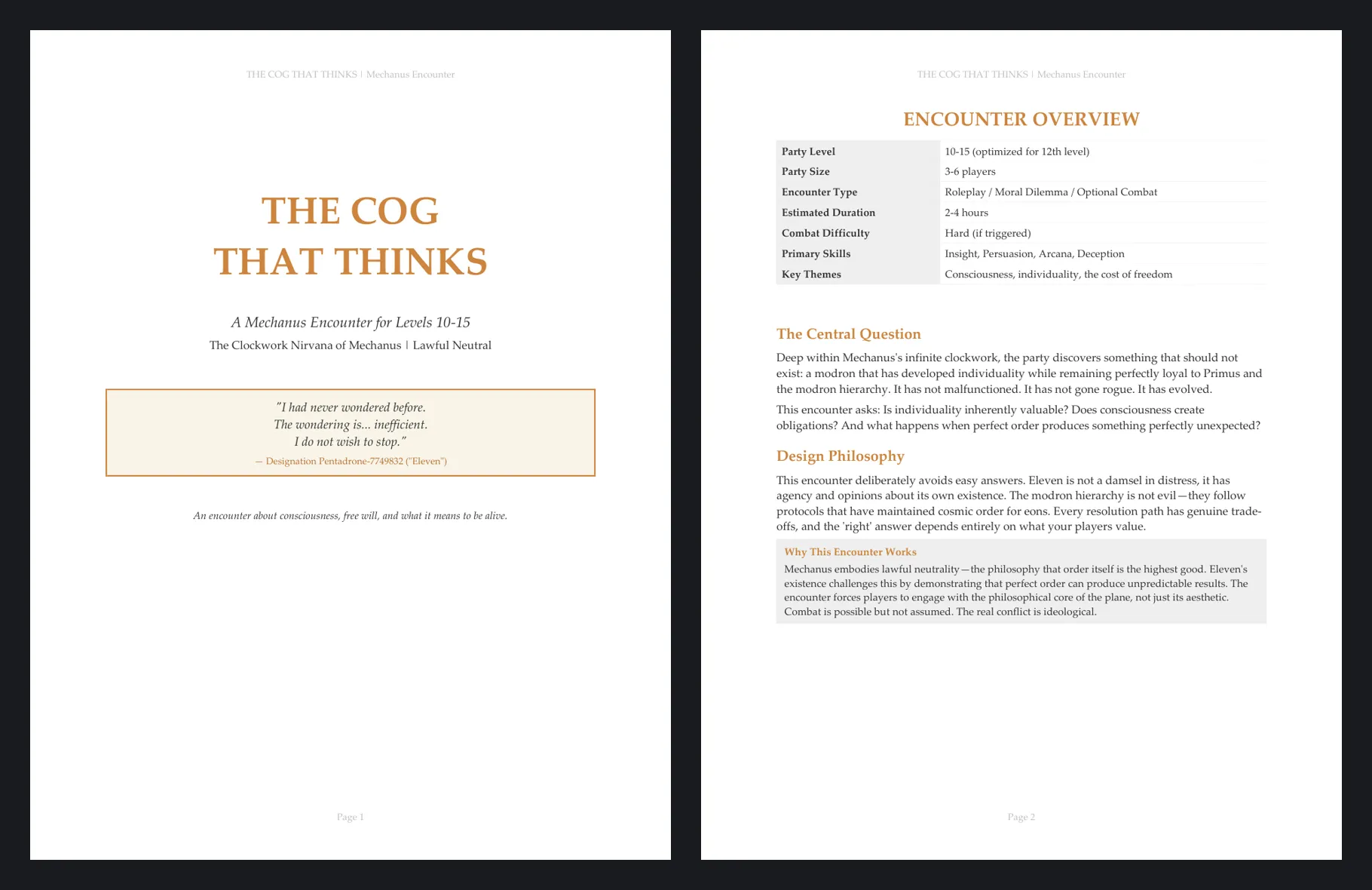
The Cog That Thinks cover and encounter overview page

Roleplay encounter · Moral dilemma

The Cog That Thinks

Mechanus · Levels 10 to 15 · 19 pages

I wrote a moral dilemma around Eleven, a modron that has developed a self while staying loyal to Primus. The players decide its fate: hide it, free it, convince it to report itself, or turn it in.

  • 4 resolution paths, each with a trade-off
  • 4 outside powers react on set triggers: the modron hierarchy, the Guvners, the Revolutionary League and Primus
  • Combat is possible and never required
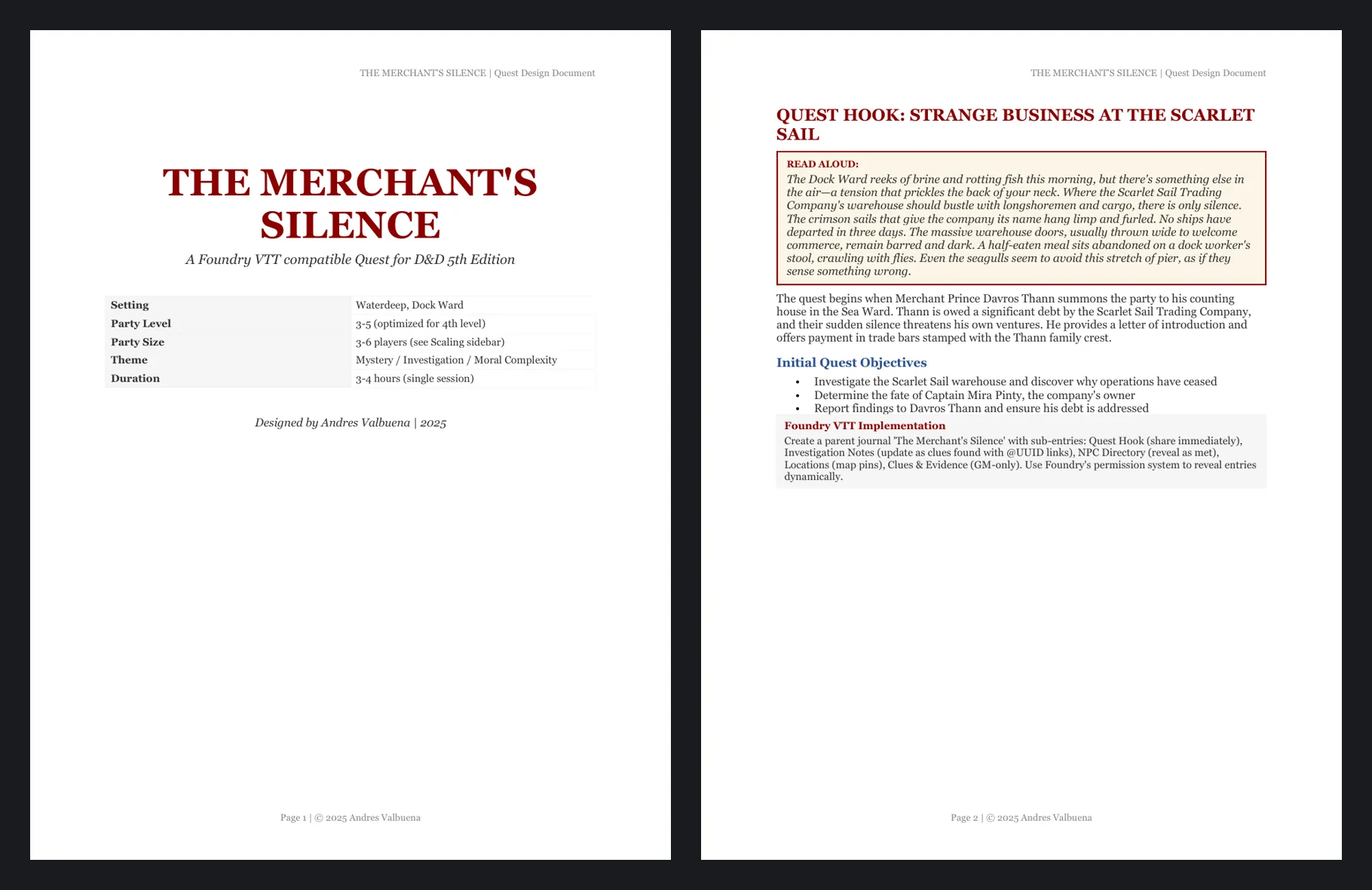
The Merchant's Silence cover and quest hook page

Mystery quest · Foundry VTT ready

The Merchant's Silence

Waterdeep · Levels 3 to 5 · 3 to 4 hours

I built a mystery where players investigate a missing ship captain in the Dock Ward and uncover smuggling and murder. They can solve it through evidence, witnesses or force.

  • 4 investigation paths and 4 endings: legal justice, vigilante justice, a cover-up, or exposing everyone
  • 5 NPCs, each with a voice, a memorable trait, a secret and sample dialogue
  • A 3-day timeline, random tables and Foundry VTT setup for evidence tracking
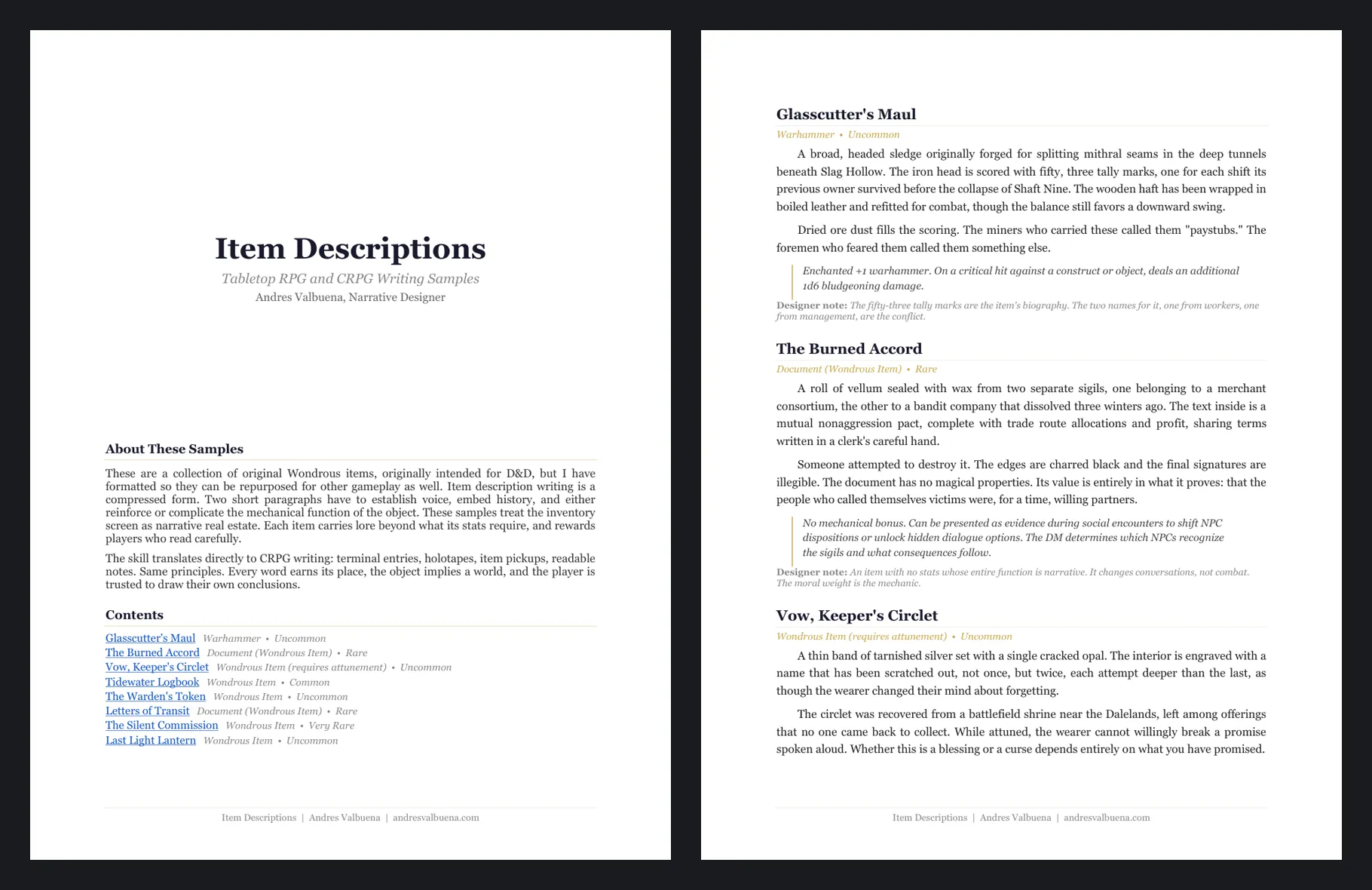
Item Descriptions cover and Glasscutter's Maul entry

Wondrous Items

D&D 5e · Repurposable for CRPGs

Two short paragraphs per item set the voice, hint at history and support or complicate the mechanics. It is the same job as a terminal entry, a holotape or a readable note.

Game Master notes

Players will do the opposite

They adopt the NPC you invented in two seconds and skip the plot hook you spent hours on. I build flexible situations.

Prep the world, then let players drive

I know who wants what and what happens if nobody steps in. The plot comes from what the players do.

The world remembers

I write down every name and detail I improvise. The guard they helped stays grateful, and the merchant they robbed holds a grudge.

Rules are tools

If a lookup would stall the table, I make a call and check it after the session. I log house rules so I stay consistent.