- developers on the team
- 6
- semesters of development
- 2
- signature puzzles, each with a trade-off
- 3
- Role
- Lead Area Designer & Narrative Designer
- Team
- 6 developers
- Tools
- Unreal Engine 5, Blueprint
- Dates
- 2024 to 2025
What I did
- Blocked out and iterated the area layouts in the Unreal editor, using geometry, lighting and choke points to pace the fear.
- Designed every puzzle, with multiple valid solutions that each cost the player something different.
- Built the Wendigo's stalking behavior trees, light aversion and ambush triggers in Blueprint.
- Designed modular sanity and flashlight systems that change how aggressive the Wendigo is.
- Ran weekly syncs and documented every system in the design document.
Puzzle design
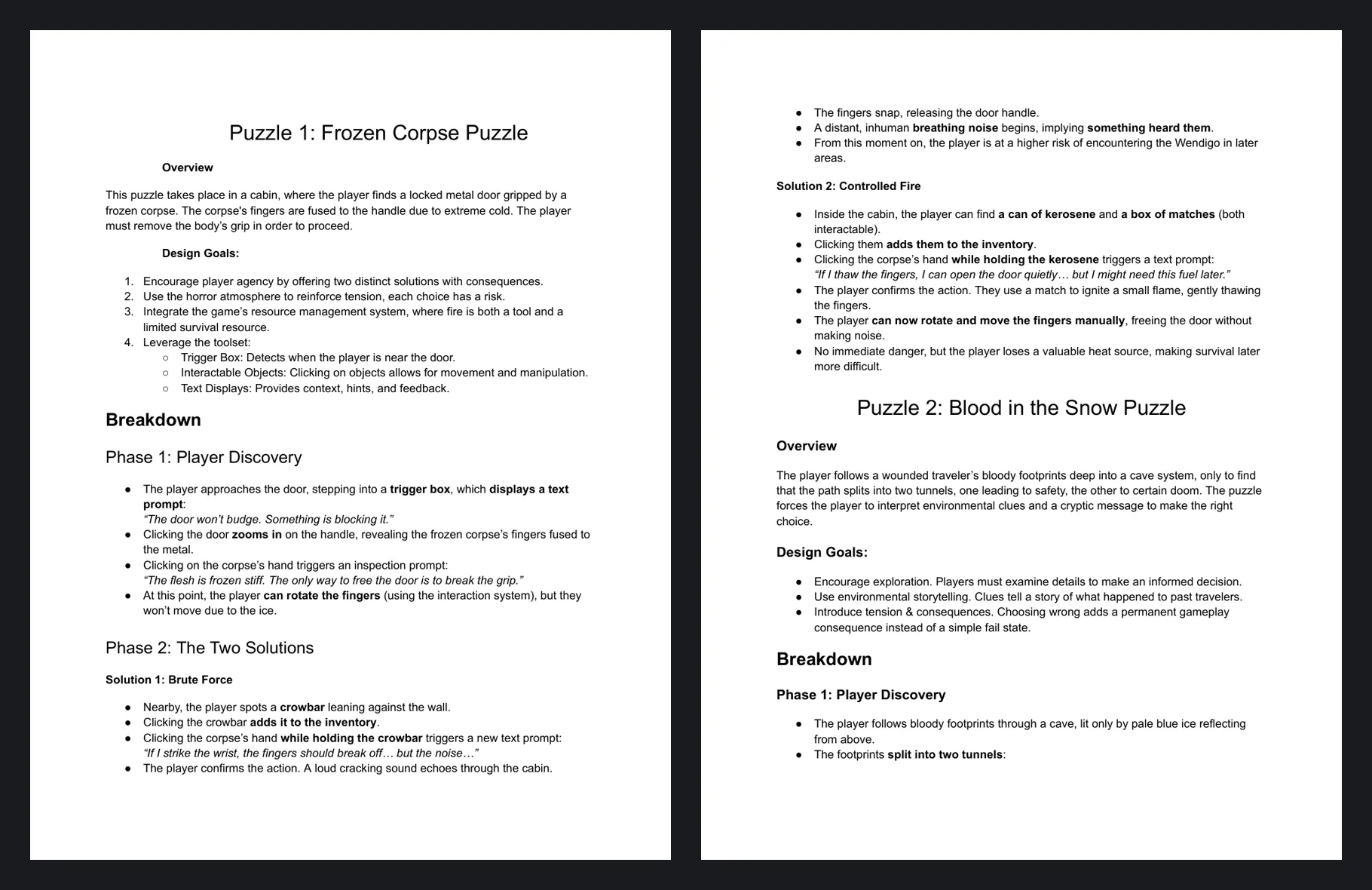
I designed every puzzle around one question: what can the player afford to lose? In Frozen Corpse, smashing the dead hand free is loud and the Wendigo hears it. Thawing it is quiet and burns fuel the player will want later. A wrong choice carries a permanent consequence, and the game never resets to a fail screen.
- Frozen Corpse: smash a frozen hand and alert the Wendigo later, or melt it and lose fuel and warmth.
- Blood in the Snow: read symbols to pick a path through a branching cave. The wrong path leaves the player with lasting auditory hallucinations.
- Silent Feast: a trap that turns the player's survival instincts against them. The solution costs inventory.
Game design document
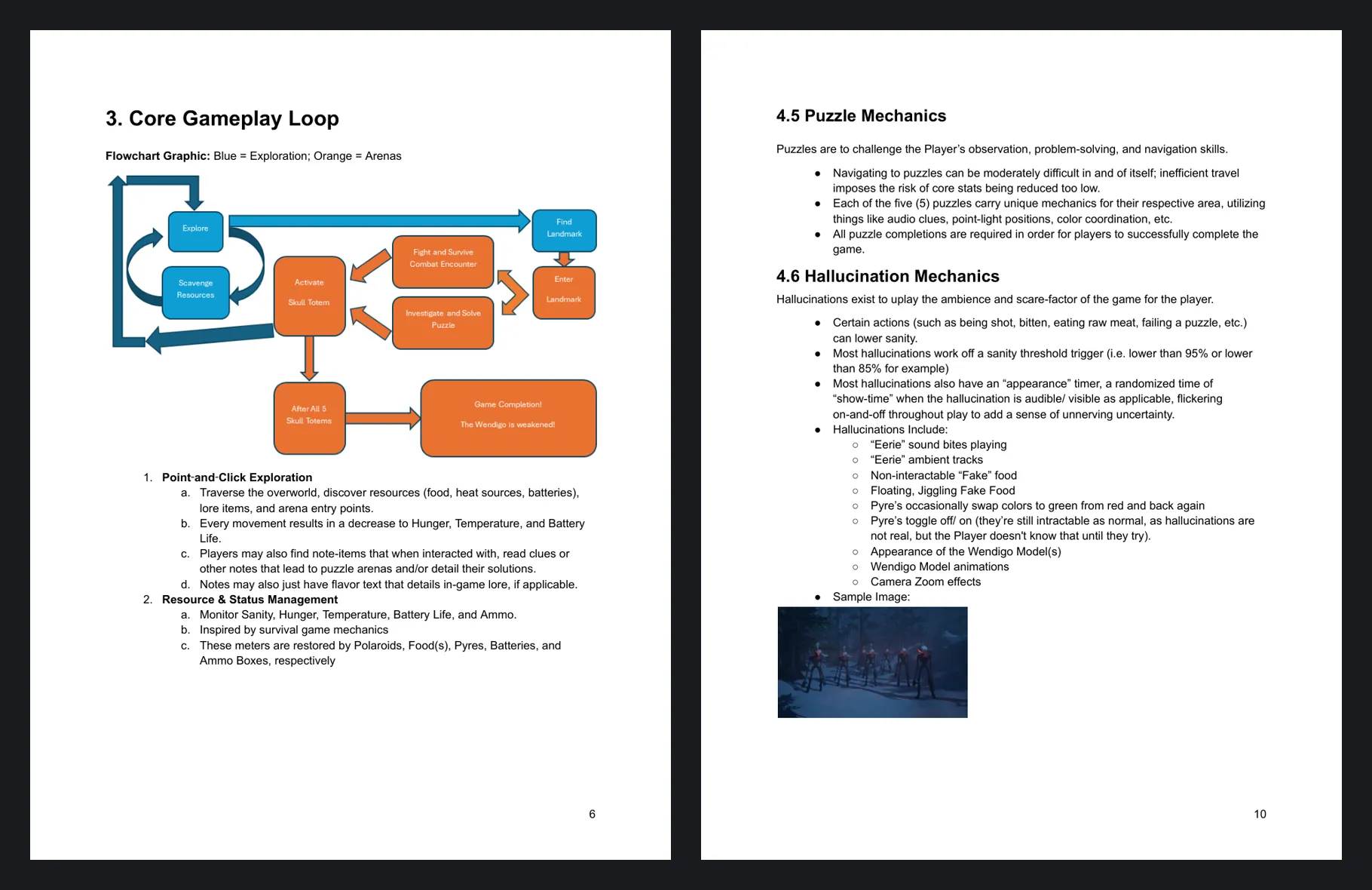
I documented every system in the team's 33-page GDD, which was on version 3.2 by the end of the project.
- Core loop flowchart: exploration, arenas, skull totems and the end state
- Systems: HUD, resources, combat, puzzles and sanity-driven hallucinations
- World and level design, art and audio direction, enemies and progression
- Asset lists for sound, food items and props
Environmental storytelling
I told the story with no dialogue. Players learn about the Wendigo from journals, prop placement and the order they move through rooms, and I built each area as a setpiece that controls line of sight.
I designed the sanity system that raises heartbeat audio, a vignette shader and camera shake as sanity drops or the Wendigo gets close.
More detail
Quest scripting
Multi-phase quest sequences in Blueprint track progression, failure states and the consequences of each choice. Trigger volumes and player position checks drive puzzle progress and ambushes.
Working across disciplines
I shared layout goals through editor blockouts and top-down diagrams. I led weekly syncs with environment art, narrative and programming, coordinated asset handoffs, and adjusted pacing from playtest feedback.
What I learned
Sanity, lighting and resource systems interact with space in ways a layout has to plan for. Readable, reusable area design and steady communication kept mood, mechanics and layout aligned under tight milestones.